

Sliced strawberries at 10 to 12 mm are the best first batch there is: forgiving, cheap, and they show you exactly what a finished load looks and sounds like. Fruit is where nearly everyone starts and where the habits that make later batches work get learned.
Why fruit first
Three reasons. It is high in water and low in fat, which is the ideal combination for freeze drying. It is cheap enough that a ruined batch costs nothing. And the finished result is unmistakable — a properly dried strawberry slice snaps with an audible crack, which teaches you the test you will use on everything else.
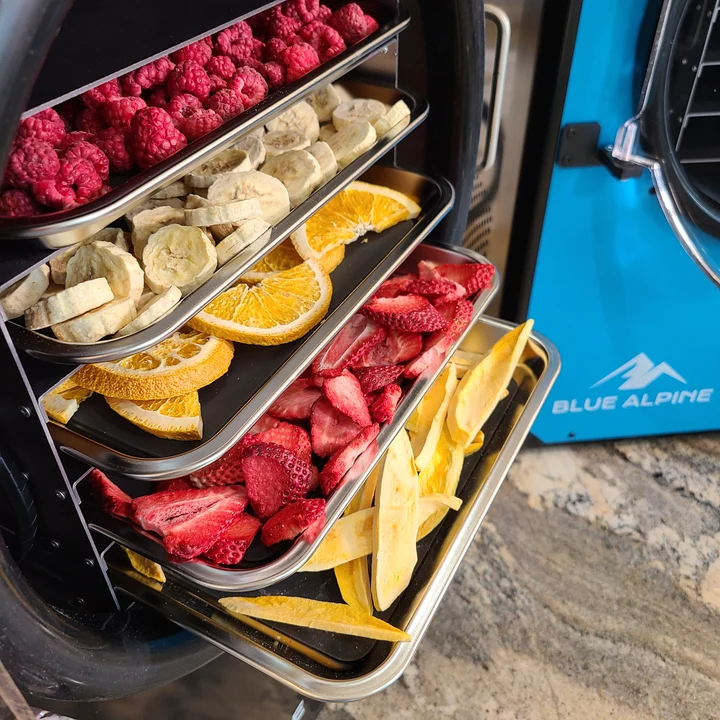
Fruit by difficulty
| Fruit | Prep | Cycle | Note |
|---|---|---|---|
| Strawberries | Slice 10–12 mm | 12–20 h | The batch to learn on |
| Raspberries | Whole | 12–18 h | Already the right size |
| Blueberries | Pierce or halve | 16–24 h | Skin resists; pierce or they stay wet |
| Apple | Core, slice 10–12 mm | 16–24 h | Dip in lemon water to stop browning |
| Banana | Slice 8–10 mm | 18–26 h | Dense and sugary; thinner than you think |
| Mango | Slice 10–12 mm | 18–26 h | Fibrous; slice across the fibre |
| Peach, nectarine | Stone, slice 10–12 mm | 18–26 h | Skin on is fine |
| Grapes | Halve | 20–30 h | Whole grapes almost never finish |
| Watermelon | Slice 12 mm | 24–30 h | Very high water; loads the cold trap |
| Citrus | Slice 5–8 mm | 16–22 h | Peel and all – makes excellent garnish |
The two prep tricks worth knowing
- Pierce the skin on anything waxy — blueberries, grapes, cranberries. An intact skin is a moisture barrier and the fruit will come out with a wet centre. Halving does the same job.
- Acidulate pale fruit. Apple, pear and banana brown by oxidation while you are slicing. A quick dip in water with lemon juice stops it, and does not affect the drying.
Vegetables: blanch first
This is the one real difference from fruit. Most vegetables should be blanched — briefly boiled, then chilled in cold water — before drying. Blanching deactivates the enzymes that would otherwise keep degrading colour, texture and flavour during storage.
| Vegetable | Blanch | Then |
|---|---|---|
| Peas | 60–90 sec | Chill fully, drain, load |
| Sweetcorn | 2–3 min | Chill, drain well |
| Green beans | 2–3 min | Cut to size first |
| Broccoli, cauliflower | 2–3 min | Small florets |
| Carrots | 2–3 min | Slice or dice 8–10 mm |
| Potato | 3–5 min | Dice; blanching also stops browning |
| Onion | No need | Dries well raw; strong smell transfers |
| Peppers | No need | Slice and load |
| Mushrooms | No need | Slice 8–10 mm |
| Leafy greens | 30–60 sec | Very fast to dry afterwards |
| Tomato | No need | Slice 10 mm; high water content |
The onion warning
Onion and garlic transfer their smell aggressively through silicone mats and into the chamber, and the next batch will taste of it. Either dedicate a set of mats to alliums, or run them last before a cleaning cycle. Freeze-dried strawberries that taste of garlic are a genuinely disappointing discovery.
What good looks like
A finished fruit slice snaps rather than bends, has no cool spot in the centre, and weighs the same after another two hours in the machine. Vegetables are the same test. If any piece flexes, the batch is not done.
Building a store from this?
Sealing correctly is what turns a good batch into a 25-year food.